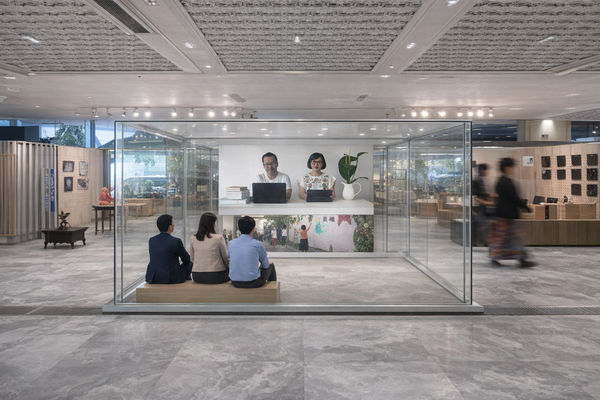
OUE Downtown Gallery, 6A Shenton Way, #01-36.
Open Monday - Friday 12 - 5 pm
Vitrine is a dedicated space for cultural research, strategic collaboration, and experimental programming. Conceived as an extension of the gallery’s curatorial practice.
Vitrine operates at the intersection of art, ideas, and corporate culture—a site where cultural narratives are developed, tested, and activated in conversation with artists, collectors, brands, and organisations.
Unlike traditional exhibition spaces, Vitrine is not defined by a fixed programme. It is intentionally flexible: a place for inquiry, prototyping, and thinking
-
Why Vitrine
As the role of art expands beyond the gallery—into corporate strategy, placemaking, education, and public discourse—there is a growing need for spaces that can hold both critical depth and real-world application. Vitrine was created to respond to this shift.
It is where we:
-
Explore how culture shapes the mainstream and vice versa
-
Develop and present research-driven projects
-
Host conversations and curated public programmes
-
Pilot new models of engagement between art, business, and society
-
-

-
-
-
EVENTS
-
[Vitrine] Meet the Artists: Opening Afternoon
Exhibition Tour 20 November 2025Free admission Email info@yeoworkshop.com to save your spot. Limited spaces available. Drop-ins welcome. Join us for the opening of Inside the Dream of a Durian Seller and a guided walkthrough... -
[Vitrine] FRAMING CLINIC: CHOOSING THE RIGHT FRAMES FOR YOUR ARTWORK
3 December 2025Free admission Email info@yeoworkshop.com to save your spot. Limited spaces available. Drop-ins welcome. From Hermès scarves to fine artworks, discover how thoughtful framing can transform your pieces and elevate your... -
[Vitrine] TALK: GODSMACKED — A SINGAPORE ART STORY AS TOLD BY MR TENG JEE HUM
11 December 2025Free admission Email info@yeoworkshop.com to save your spot. Limited spaces available. Drop-ins welcome. Join artist, collector, and author Teng Jee Hum for an intimate session that journeys through three decades... -
Video Screening Series
A Week-long Screening of Commissioned Video Series- Indonesian Art & Cultural Practice TBDVideo SeriesYeo Workshop announces a special screening on Date TBD at its Downtown Gallery space, featuring a newly commissioned 10 part series of short 15–20 minute feature videos developed in collaboration with LIR Space, led by Dito Yuwono and Mira Asriningtyas, Directors of Cemeti - Institute for Art and Society.
Commissioned by Yeo Workshop as part of its expanding research, publishing, and library initiatives, the ten-part series offers critical insights into independent art infrastructures, artist-led movements, and cultural production across Indonesia. Following the public screening, the videos will be available on Yeo Workshop’s website
-


![[Vitrine] Meet the Artists: Opening Afternoon, Exhibition Tour](https://static-assets.artlogic.net/w_600,c_limit,f_auto,fl_lossy,q_auto/ws-artlogicwebsite0486/usr/images/events/main_image_override/85/agas_softinfrastructure_oct250718_webres.jpg)
![[Vitrine] FRAMING CLINIC: CHOOSING THE RIGHT FRAMES FOR YOUR ARTWORK](https://static-assets.artlogic.net/w_600,c_limit,f_auto,fl_lossy,q_auto/ws-artlogicwebsite0486/usr/images/events/main_image_override/86/img_2247.jpg)
![[Vitrine] TALK: GODSMACKED — A SINGAPORE ART STORY AS TOLD BY MR TENG JEE HUM](https://static-assets.artlogic.net/w_600,c_limit,f_auto,fl_lossy,q_auto/ws-artlogicwebsite0486/usr/images/events/main_image_override/87/teng-jee-hum-x-chun-u-bi-work-image-2-1-.jpg)